Every early build contains a choice that the team cannot settle from inside the project. The playtest turns that uncertainty into something observable.
Prepare a question, not a performance
Small sessions become more useful when they focus on one decision. Does the route read? Does the sound announce a change? Does a new player understand what matters? A specific question leaves the room with an answer that can influence tomorrow’s work.
That focus also reduces the temptation to explain. If a person needs a long introduction before they can interact, the build has already offered a useful signal.
Keep the notes close to the work
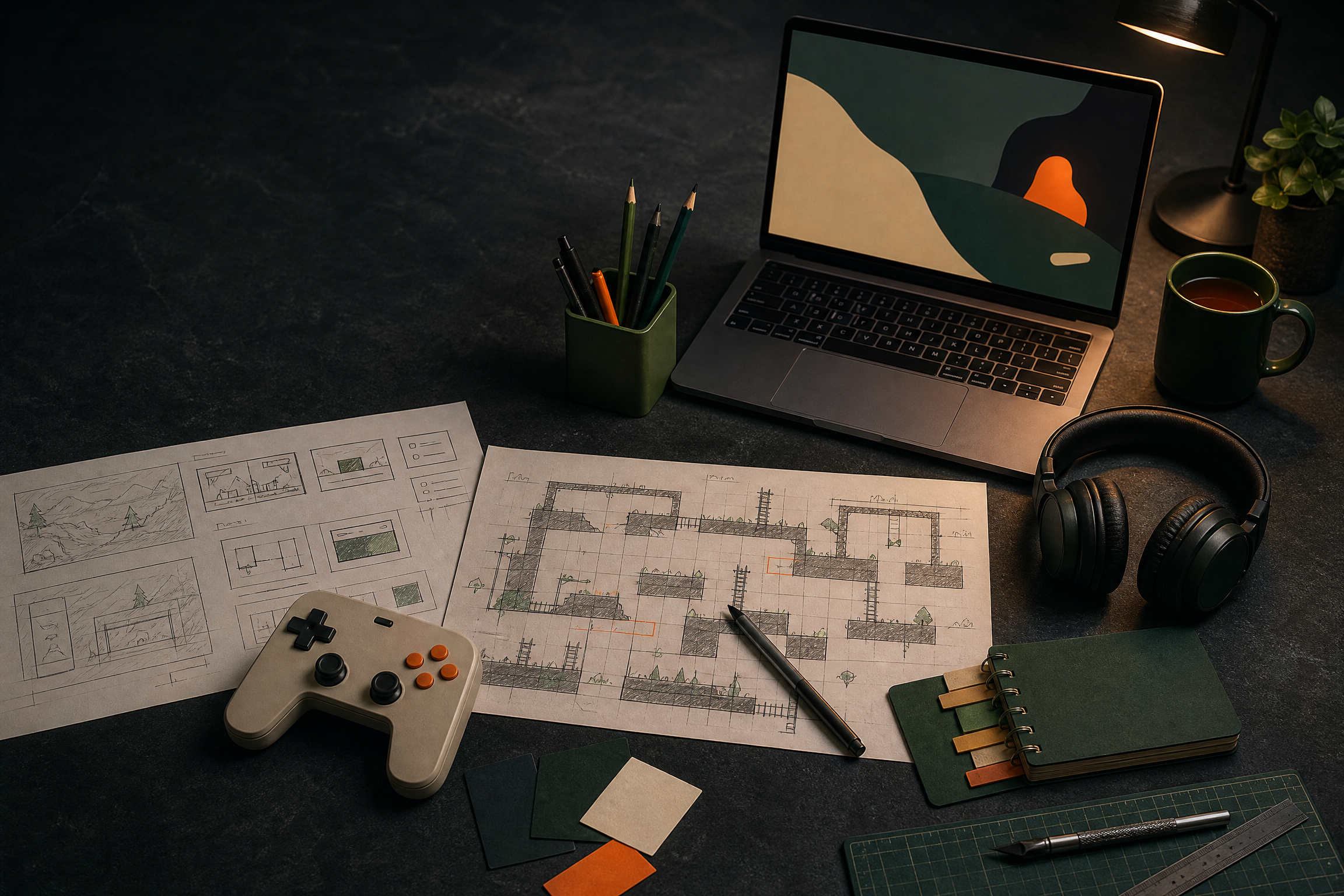
Handwritten maps, rough cards and tiny prompts are not romantic props. They make decisions visible and moveable. A team can compare a player’s hesitation with the rule that caused it, then decide what needs to change without treating feedback as a score.
The best studio methods give people permission to revise the plan. They do not merely confirm that the plan existed.